WOAH SOUTHEAST ASIA WILDLIFE HEALTH NETWORK MEETING
2026-08-05 22:39:41
As the emergence of zoonotic diseases continues to pose increasing threats worldwide and the interdependence between human, animal and ecosystem health becomes more evident, wildlife health management has become a key component of the One Health approach.
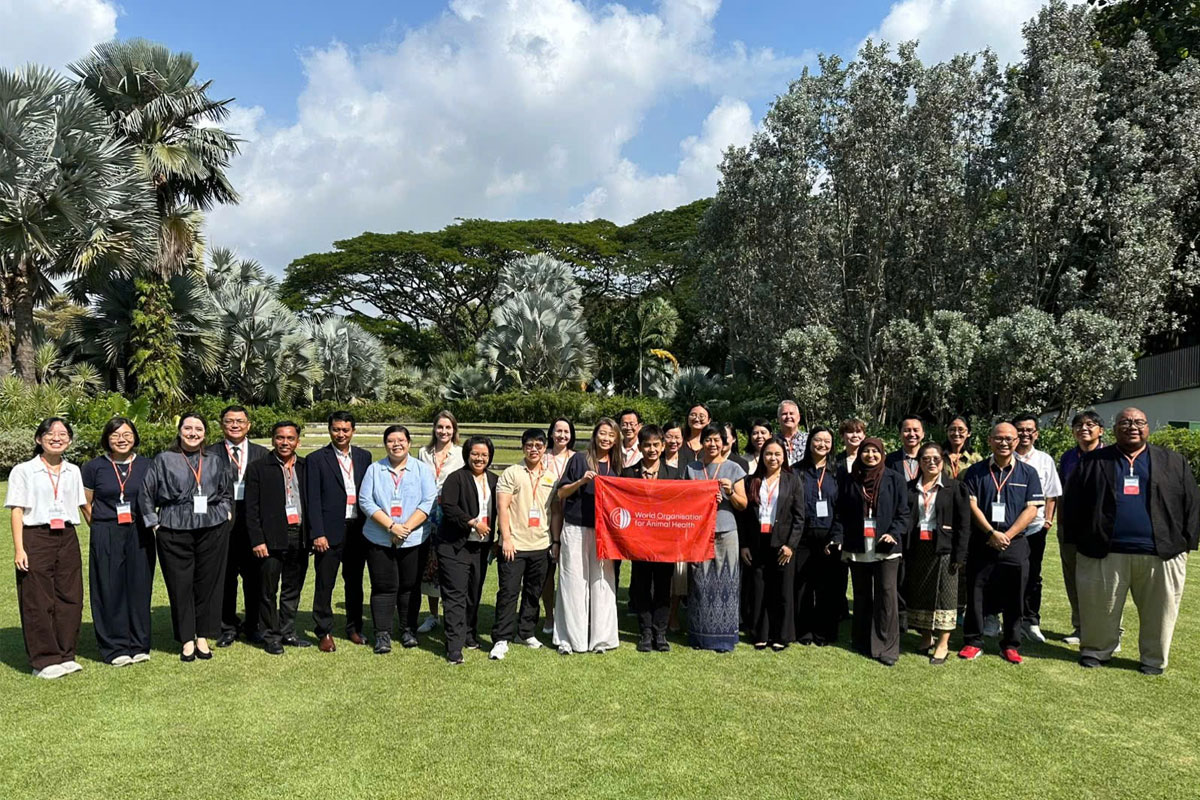
During the WOAH Southeast Asia Wildlife Health Network Meeting, Empowering Wildlife Trade Authorities to protect Wildlife Health, held in Singapore from 4–6 August 2026, representatives from Southeast Asian countries discussed strategies for managing disease risks associated with wildlife trade, strengthening intersectoral collaboration, and sharing international experiences in safeguarding wildlife health. A key highlight of the programme was a technical visit to the National Parks Board (NParks) and Sungei Buloh Wetland Reserve, providing participants with first-hand insights into Singapore's implementation of the One Health approach for wildlife conservation and health management.
Woah southeast asia wildlife health netword meeting
1. Wildlife Health Management through a One Health Lens
Unlike traditional approaches that primarily focus on biodiversity conservation or responding to disease outbreaks, Singapore has developed a preventive management system that integrates biodiversity conservation, ecosystem management, wildlife health surveillance and public health into a single governance framework.
The National Parks Board (NParks), under the Ministry of National Development, is responsible for managing Singapore's parks, nature reserves, biodiversity and wildlife. Through the Animal & Veterinary Service (AVS), NParks also oversees animal health and welfare. Consolidating these functions within one agency facilitates information sharing, risk assessment and rapid coordination in responding to emerging wildlife health threats.
According to NParks, wildlife health extends far beyond veterinary medicine. It is intrinsically linked to biodiversity conservation, urban planning, environmental management and public health. Consequently, One Health is implemented not merely as an intersectoral collaboration programme, but as an integrated governance approach.
2. Sungei Buloh Wetland Reserve – A Natural Laboratory for One Health
As Singapore's first Ramsar site and an important stopover along the East Asian–Australasian Flyway, Sungei Buloh Wetland Reserve plays a critical role in monitoring ecosystem health.
Long-term monitoring programmes are conducted on migratory birds, estuarine crocodiles, otters and other native wildlife, alongside environmental monitoring, including water quality assessment and biodiversity surveys. These data are used to detect early warning signs of ecological changes, assess disease risks and support evidence-based management decisions.
Importantly, surveillance activities are designed not only to detect diseases but also to maintain healthy ecosystems. Under the One Health approach, resilient ecosystems constitute the first line of defence against the emergence and transmission of zoonotic diseases.
3. From Outbreak Response to Risk Management
A central theme throughout the workshop was the implementation of the WOAH Guidelines for Addressing Disease Risks in Wildlife Trade.
Based on international experience, disease risks are not confined to border inspections or wildlife markets. They may arise at any stage of the wildlife trade chain, including harvesting or breeding, transportation, import and export, quarantine, wildlife rescue and rehabilitation centres, and the release of wildlife back into their natural habitats.
Consequently, disease risk management should be applied throughout the entire wildlife trade chain through systematic risk assessment, wildlife health surveillance, inter-agency information sharing and the implementation of appropriate risk mitigation measures at each stage.
A key message emphasized throughout the workshop was that "prevention is more effective and far less costly than responding after an outbreak has occurred." This principle is increasingly guiding WOAH's global strategy for wildlife health management.
4. Intersectoral Collaboration – The Foundation of One Health
One of the major factors behind Singapore's success is its well-established mechanism for collaboration among government agencies, research institutions, universities and scientific organizations.
Information on wildlife health, environmental monitoring and surveillance findings is routinely shared among NParks, AVS, the Ministry of Health, the National Environment Agency, universities and diagnostic laboratories. These data support joint risk assessments and evidence-based policymaking.
Singapore's experience demonstrates that One Health is not simply about coordination during disease outbreaks. Rather, it is a sustained governance mechanism that promotes collaboration across surveillance, research, data sharing, policy development and public engagement.
5. Viet Nam's Recommendations
Drawing upon the discussions during the workshop and Singapore's experience, Viet Nam emphasized that wildlife health management should be implemented under the One Health approach, with a strong focus on prevention and risk management rather than responding only after disease outbreaks occur.
In this regard, Viet Nam highlighted the importance of applying disease risk assessment throughout the entire wildlife trade chain—from harvesting or captive breeding, transportation, import and export, quarantine, wildlife rescue and rehabilitation, to the release of wildlife into the wild. Wildlife health surveillance should also be integrated with biodiversity and environmental monitoring to facilitate the early detection of emerging disease threats.
Viet Nam further stressed the need to strengthen collaboration among wildlife authorities, CITES Management Authorities, veterinary services, public health agencies, environmental authorities and law enforcement bodies. Enhanced data sharing, integrated surveillance and the incorporation of scientific risk assessments into policymaking are essential to improving national preparedness. These priorities are fully aligned with the implementation of Viet Nam's One Health Partnership Framework 2026–2030.
At the regional level, Viet Nam proposed the establishment of an ASEAN One Health Wildlife Health Cooperation Programme, coordinated through the WOAH Southeast Asia Wildlife Health Network in close collaboration with the ASEAN Working Group on CITES and Wildlife Enforcement (AWG CITES-WE). The programme should focus on strengthening transboundary wildlife health surveillance, promoting regional data sharing and early warning systems, harmonizing disease risk assessment methodologies for wildlife trade, and supporting joint capacity-building, research and training activities across ASEAN Member States.
Viet Nam also expressed its hope for continued technical and financial support from WOAH, FAO, WHO, UNEP, the CITES Secretariat, and other development partners to strengthen wildlife health surveillance systems, laboratory capacity, scientific research, technological innovation, and the effective implementation of One Health initiatives at both national and regional levels.
Viet Nam believes that investing in One Health is an investment in biodiversity conservation, public health, food security and sustainable development. Only through strong collaboration among governments, international organizations and development partners can we effectively manage wildlife disease risks, protect ecosystem health and build a healthier, safer and more resilient Southeast Asia.
6. Towards Healthier Ecosystems through One Health Governance
The overarching message of the 2026 WOAH Southeast Asia Wildlife Health Network Meeting was clear: the health of wildlife, people and ecosystems is inseparable.
Singapore's experience demonstrates that One Health is far more than a framework for preventing and responding to zoonotic diseases. It represents a modern governance approach built upon science, intersectoral collaboration and ecosystem-based management.
As countries continue to face increasingly complex health challenges driven by biodiversity loss, environmental change and wildlife trade, strengthening One Health governance will be essential to safeguarding wildlife, protecting public health and promoting sustainable development across the region
VU THI PHUONG, ONE HEALTH NATIONAL COORDINATOR, VIET NAM MINISTRY OF AGRICULTURE AND ENVIRONMENT
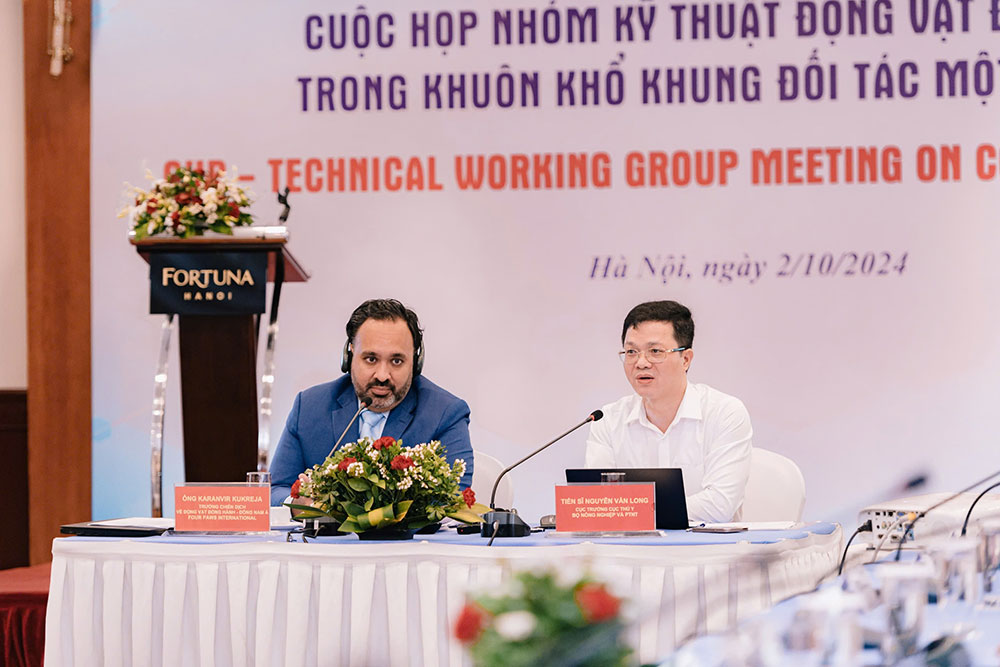
On the morning of October 2nd, 2024, the OH Partnership on Zoonotic Disease Prevention led by the Ministry of Agriculture and Rural Development in coordination with the FOUR PAWS International organized the 2nd Companion Animal...