


2026-09-07 14:02:08
Vu Thi Phuong, Viet Nam One Health Coordinator
Lisbon, Portugal, 6 September 2026 – At the 9th World One Health Congress (WOHC9), currently taking place in Lisbon, Portugal, Viet Nam One Health Coordinator shared the country’s experience in developing and strengthening the One Health Partnership (OHP) as a platform for dialogue — evolving from responses to specific disease risks towards a more sustained mechanism for national dialogue, coordination and learning.
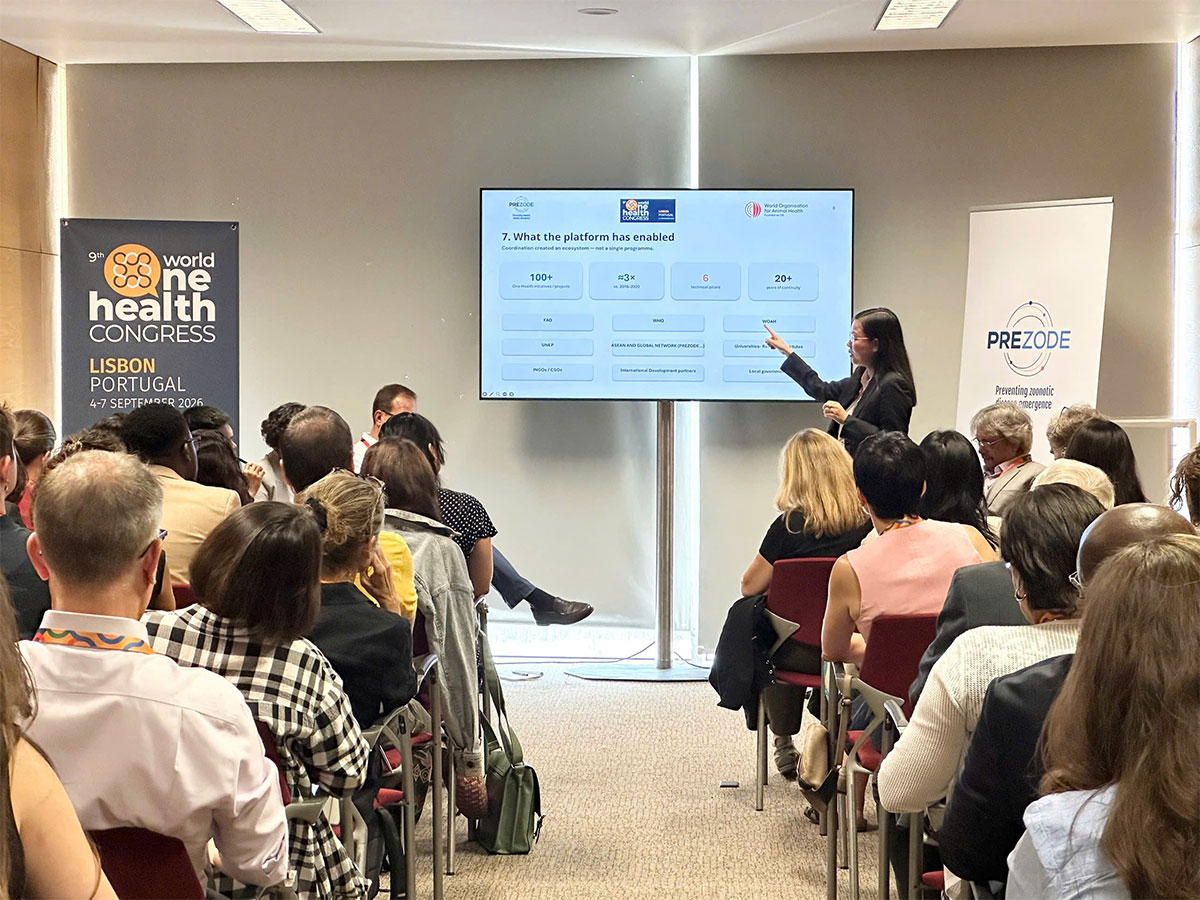
Under the theme “Institutionalizing One Health Dialogue Platforms: The National Experience of Viet Nam,” Viet Nam’s presentation was delivered as part of the session “Operationalizing One Health Prevention: Building Science–Society–Policy Interfaces from Local Action to Global Governance.” hosted by Prezode. The presentation focused on a growing challenge in operationalizing One Health: how to translate broad agreement on the One Health approach into sustainable mechanisms for coordination that can generate practical impact.
Viet Nam’s One Health journey spans more than two decades, marked by a gradual shift from issue-specific and project-based responses towards a more sustained platform for dialogue, coordination and learning.
One important milestone was the 2003 avian influenza crisis, which highlighted the need for stronger collaboration among the human health, animal health and other relevant sectors.
In 2006, Viet Nam established the Partnership for Avian and Human Influenza (PAHI), providing a foundation for multisectoral cooperation in the prevention and control of avian influenza and other zoonotic diseases.
In 2016, this approach was further expanded through the establishment of the One Health Partnership (OHP). During 2021–2025, collaboration was organized around six technical pillars: pandemic prevention, antimicrobial resistance (AMR), food safety, animal welfare, environment, and Research-to-Policy (R2P).
The 2026–2030 period continues to focus on strengthening One Health implementation and governance at the national level.
From this perspective, Viet Nam’s development has not been about starting again at each stage. Rather, it has been a process of gradually accumulating and institutionalizing experience, partnerships, knowledge and coordination mechanisms.
One of the key messages from Viet Nam at the Congress was that One Health cannot be operationalized simply by asking sectors to work together. We also need spaces and mechanisms where such collaboration can take place continuously and meaningfully.
One Health risks emerge at the interface between people, animals and the environment, while responsibilities for managing these risks are distributed across different sectors, levels of government and institutions.
Similarly, scientific evidence does not reside in one place. Data may be held by ministries and agencies, universities, research institutes, laboratories, local authorities or communities themselves.
At the same time, decision-making authority is also distributed across different levels.
International partners bring valuable resources, expertise and experience. However, without a mechanism to connect these contributions at the national level, it can be difficult to fully align them with national priorities.
For this reason, Viet Nam emphasizes the role of dialogue as an interface connecting three dimensions: Science – Society – Policy.
This is also the basis for viewing OHP not simply as a programme, but as a platform that connects institutions, initiatives, people, evidence and resources around national One Health priorities.
The OHP platform connects Government leadership, the annual One Health Forum, the OHP Secretariat and technical working groups, while also engaging the scientific community, local authorities, civil society organizations, the private sector, communities and development partners.
Within this architecture, OHP does not replace existing institutions or programmes. Instead, it connects the resources and experience that already exist within the system.
This is particularly important for One Health implementation. In practice, it is neither feasible nor necessary to create a new “One Health agency” to replace all existing sectoral institutions.
What matters more is to create mechanisms through which existing institutions can jointly understand risks, share evidence, discuss priorities and coordinate action.
A key feature of Viet Nam’s experience is the development of Research-to-Policy (R2P) as a two-way interface between research and policymaking.
Rather than viewing science as a one-way “pipeline,” in which researchers generate evidence and then pass it on to policymakers, R2P is designed as a continuous cycle:
Research and surveillance → synthesis and risk analysis → dialogue with policymakers → policy options and recommendations → decision, implementation and feedback.
The important point is that this process works in both directions.
Researchers need to understand policy needs and questions, while policymakers need access to reliable scientific evidence.
R2P was therefore introduced into OHP to make the use of scientific evidence in cross-sectoral policy development more systematic.
The OHP R2P Working Group is currently co-led and facilitated by CIRAD in Viet Nam, operating through regular meetings focused on priority issues.
To illustrate this approach, Viet Nam presented an example of research on wildlife-related risks.
The research was conducted across 38 provinces and cities, covering:
The study detected 37 virus types at source points, including 19 newly identified viruses.
Importantly, coronavirus positivity among rodents increased along the supply chain, from 21% to 32% and then 56%.
These findings demonstrate that risk assessment cannot focus only on individual points. It needs to consider the entire chain and the interfaces between people, animals and the environment.
More importantly from a One Health perspective, the research findings did not remain in the laboratory.
Through annual technical dialogues involving ministries and agencies, provinces and cities, research institutes and international partners, the findings were brought into discussions on risk management and the development of recommendations.
Recommendations emerging from this process were used in consultations on the revision of the Law on Disease Prevention and the Law on Food Safety, and also contributed to activities related to the Joint External Evaluation (JEE) under the International Health Regulations (IHR).
This example demonstrates that the value of One Health lies not only in generating more evidence, but also in bringing that evidence into the right dialogue to influence how risks are understood and managed.
One Health cannot be implemented only at the central level.
Risks occur locally, where communities, local authorities, production systems, supply chains and laboratories are operating.
A key function of the dialogue platform is therefore to connect local action with national learning.
Local experience and evidence can be brought into national dialogue through the One Health Forum, technical working groups and policy processes.
These discussions can generate collective outputs such as guidance, national plans, capacity development and resource alignment.
But this flow is not one-way.
National policies and lessons also need to return to the local level, where they can be implemented, tested and further improved.
In other words:
Local action generates evidence; national dialogue turns that evidence into shared lessons; and those lessons return to strengthen local action.
An important outcome of this process has been the development of an increasingly broad One Health ecosystem.
During 2021–2025, Viet Nam recorded more than 100 One Health initiatives and projects. These initiatives were implemented across six technical pillars and involved a diverse range of partners, including FAO, WHO, WOAH and UNEP; ASEAN and global One Health networks such as PREZODE; universities and research institutes; non-governmental and civil society organizations; international development partners; and local governments.
At the same time, Viet Nam has accumulated more than 20 years of continuous One Health experience, creating an important body of partnerships, coordination experience and institutional knowledge.
For this reason, Viet Nam does not view OHP simply as a programme.
It is an ecosystem-enabling platform, whose value lies in connecting projects, people, evidence and resources around shared national One Health priorities.
Viet Nam does not view its national One Health platform as a structure separate from international processes.
At the global level, the Quadripartite — FAO, UNEP, WHO and WOAH — together with initiatives on pandemic prevention, AMR, the International Health Regulations and global One Health networks such as PREZODE, provides common frameworks, commitments and knowledge.
At the regional level, ASEAN provides an important space for cooperation, particularly in addressing transboundary risks.
At the national level, the OHP platform helps connect these commitments and frameworks with policy dialogue, technical cooperation and resource alignment in Viet Nam.
However, Viet Nam emphasizes that One Health governance cannot be a top-down process alone.
Practical experience from local levels needs to be consolidated nationally and brought into regional and global discussions.
From this perspective:
Global requirements and resources move downward; local evidence and experience move upward; and the national OHP platform connects these two directions.
This is how Viet Nam sees One Health as a multi-level learning system, in which local, national, regional and global levels are not separate layers, but continuously exchange evidence, policies and experience.
Based on the development of OHP, Viet Nam shared three key lessons.
First, institutionalize dialogue, not only institutions.
A regular dialogue platform can help maintain continuity in collaboration even after individual projects or specific crises have ended.
Second, build a two-way interface between science, society and policy.
Research needs to provide evidence for policy decisions, while policymakers and communities also need to help shape research priorities.
Third, connect national One Health platforms with the global One Health governance system.
Local lessons need to reach regional and global platforms, while global commitments need to be translated into concrete action at the local level.
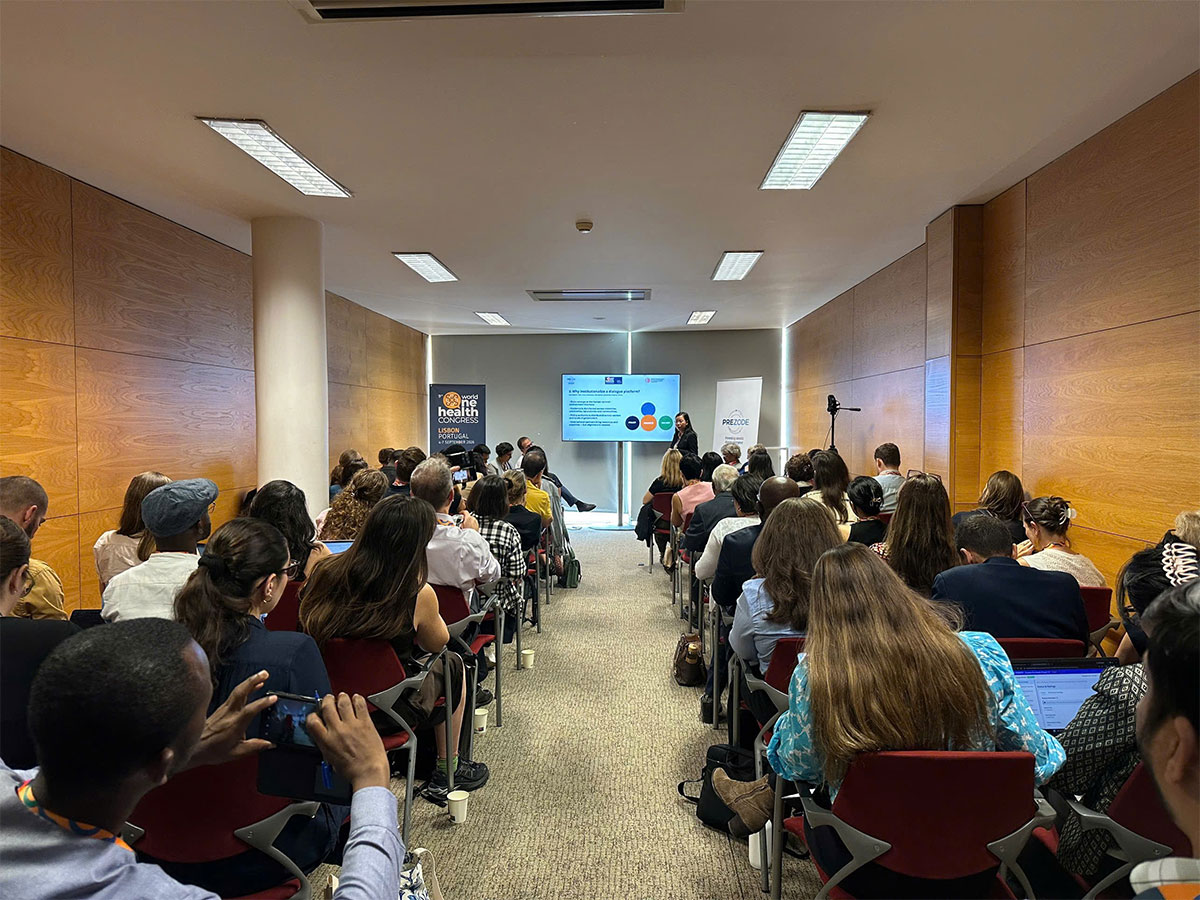
Viet Nam emphasized that institutionalizing One Health does not simply mean establishing another agency or another programme.
More importantly, it means creating a structured and sustained space for dialogue, where scientists, policymakers, local authorities, communities, the private sector and development partners can share evidence, identify priorities, discuss solutions and learn from one another.
from crisis response → project-based collaboration → dialogue platform → shared learning → connection with regional and global One Health governance.
And, as highlighted in Viet Nam’s concluding message at the Congress:
“When evidence can travel to policy, policy can listen to society, and local experience can travel back to the global level — One Health becomes operational.”