4th Meeting of the Food Safety Technical Working Group Under the One Health Partnership for Zoonoses (OHP)
2025-12-05 14:00:52
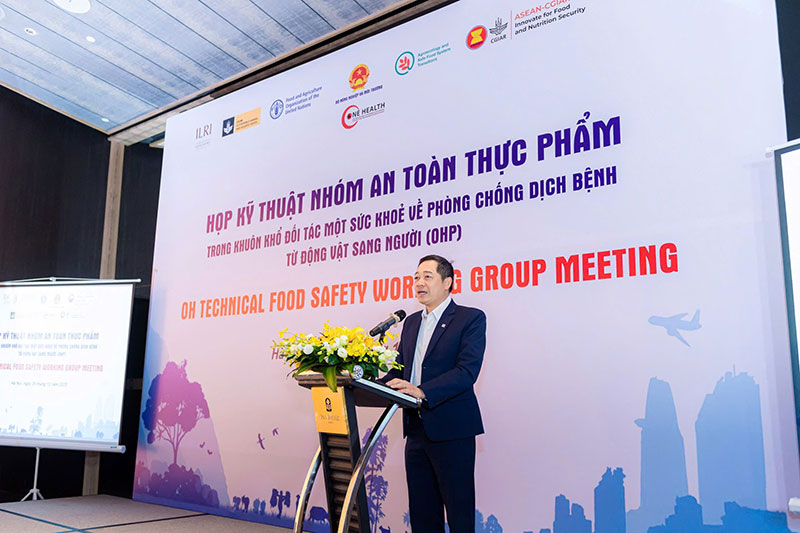
On 5 December 2025, the 4th Meeting of the Food Safety Technical Working Group (FSTWG) was convened, co-chaired by the Ministry of Agriculture and Environment (NIAS, OHP Secretariat), the International Livestock Research Institute (ILRI), and development partners within the One Health Partnership for Zoonoses (OHP).
The meeting gathered representatives from the Ministry of Agriculture and Environment, MOH, the Ministry of Industry and Trade (MOIT), research institutes, universities, embassies, international organizations, as well as numerous enterprises and associations in the agriculture and food sectors.
Focus on policy updates and priority-setting for food safety, 2026–2030
According to the meeting agenda, participants received updates on key issues, including:
- The progress of revising the Law on Food Safety, the development of new standards and technical regulations, and the orientation toward strengthening risk-based food safety management.
- Outcomes of the SafeGRO Project (Canada) in improving food safety management in vegetable and pork value chains and supporting regulatory reforms.
- FAO–NIAS collaborative activities, including laboratory capacity enhancement, risk assessment, and technical support for national food safety systems.
- Updates from FSTWG members on ongoing projects, World Food Safety Day 2025 communication initiatives, and proposed communication plans for the upcoming year.
- Presentations from ILRI on CGIAR initiatives related to food safety risk assessment, market and slaughterhouse interventions, and strengthening the One Health approach to foodborne disease control.
Food safety continues to be a pillar of the One Health Partnership
Participants reaffirmed that food safety remains a core, cross-cutting priority within the One Health Partnership, playing a vital role in protecting public health, safeguarding agricultural trade, and supporting sustainable development.
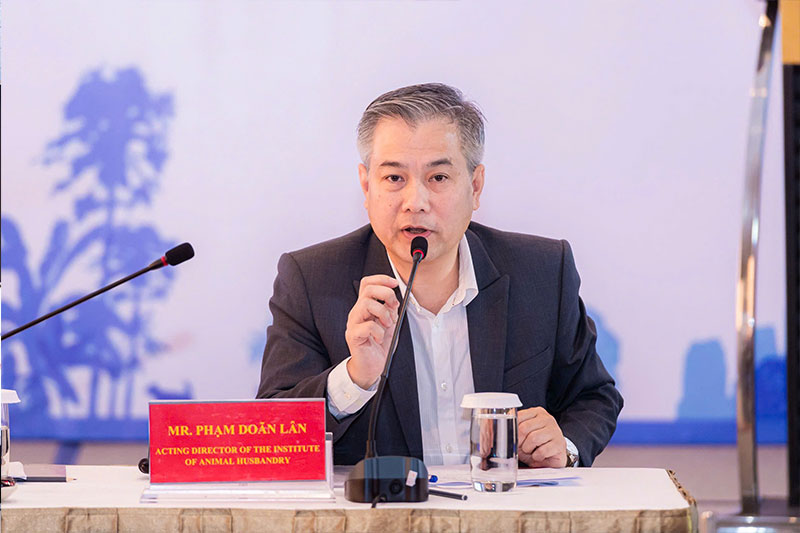
Food safety management requires multi-sectoral coordination, evidence-based approaches, and implementation across all stages of the supply chain—from “farm to table”—particularly in the context of:
- increasing foodborne disease outbreaks,
- growing antimicrobial resistance (AMR),
- stringent requirements from export markets (EU, Japan, the United States), and
- rapid changes in food systems.
Proposed national food safety priorities for 2026–2030
The meeting discussed and reached consensus on several key priorities to strengthen Viet Nam’s food safety capacity over the next five years:
- Enhance and modernize the food safety legal and regulatory framework, aligned with international standards.
This includes strengthening microbiological standards, risk assessment procedures, and harmonizing monitoring requirements for livestock and fresh food products.
- Strengthen laboratory and surveillance capacity for food safety,
with emphasis on pathogen detection, AMR monitoring, and the application of whole genome sequencing (WGS), integrated with multisectoral rapid alert systems.
- Expand risk-based and value-chain food safety interventions,
including pilot implementation in priority provinces and strengthened oversight of traditional markets, small-scale slaughterhouses, and retail food outlets.
- Enhance communication and public awareness on food safety,
through campaigns targeting producers, enterprises, schools, and consumers.
- Promote public–private partnerships and mobilize international support,
recognizing the pivotal role of private companies, retail chains, and industry associations in advancing food safety innovation and shared responsibility.
Tribute to Dr. Fred Unger – Co-Chair of the FSTWG
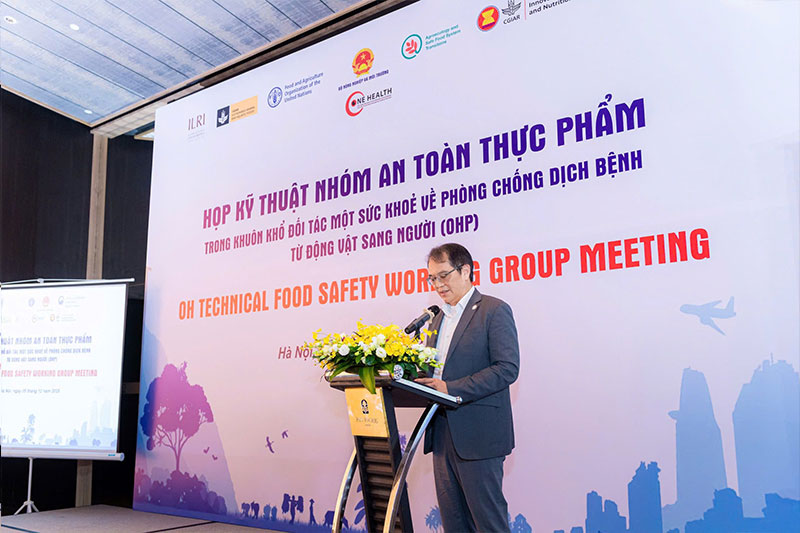
During the closing session, the OHP Secretariat and all participants expressed their appreciation to Dr. Fred Unger for his many years of dedication and contributions to the establishment, coordination, and growth of the FSTWG.
His leadership and commitment—together with ILRI’s support—have been instrumental in shaping Viet Nam’s first multisectoral mechanism for food safety under the One Health framework.
Orientation for the 5th Meeting
The meeting proposed organizing the next FSTWG session between January and June 2026, focusing on:
- implementing the new phase of the working group,
- reviewing the 2026–2030 food safety plan, and
- identifying priority themes and co-chair arrangements for the next cycle.
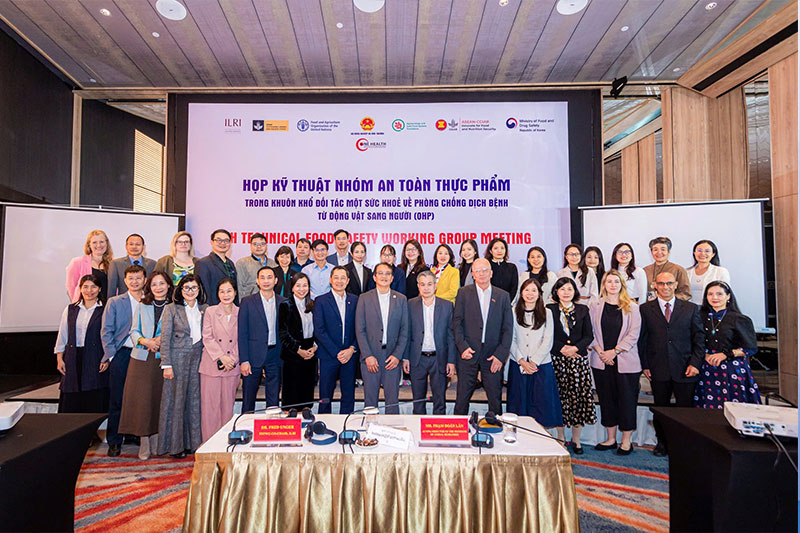
The 4th Meeting of the Food Safety Technical Working Group concluded successfully, reaffirming the strong commitment of the Government of Viet Nam and development partners to building a transparent, responsible, and sustainable food safety system in alignment with food system transformation and the One Health vision.
Bài viết khác